Introduction
In 2025, quantum computing has firmly transitioned from academic labs to practical software development tools. While full-scale fault-tolerant quantum computers remain on the horizon, the noisy intermediate-scale quantum (NISQ) era has delivered real value through hybrid quantum-classical computing. This approach combines the unique capabilities of quantum processors with the reliability of classical systems, enabling developers to solve complex problems that were previously intractable.
The key enabler for software developers? Hybrid APIs provided by leading cloud quantum platforms. These APIs allow seamless integration of quantum circuits into classical code, handling everything from job submission to result retrieval. Companies like IBM, Amazon, Microsoft, and Google have built robust ecosystems that lower the barrier to entry, making quantum programming accessible to traditional software engineers.
This comprehensive guide explains how quantum computing is impacting software development, what hybrid APIs are, how they work, major providers in 2025, practical examples, challenges, and the exciting future ahead. Whether you're a seasoned developer or just quantum-curious, you'll gain actionable insights into this transformative technology.

Qubits enable quantum computers to process vast possibilities simultaneously (Illustration)
Table of Contents
What is Quantum Computing?
Traditional computers use bits (0 or 1) as the basic unit of information. Quantum computers use qubits, which can exist in superposition — representing both 0 and 1 simultaneously. Combined with entanglement and interference, this enables quantum systems to explore enormous solution spaces in parallel.
However, today's quantum hardware is noisy and limited to hundreds of qubits. Pure quantum algorithms like Shor's (for factoring) or Grover's (for search) require fault-tolerant systems with thousands of logical qubits — still years away. This is where hybrid approaches shine, using quantum processors for the hardest sub-problems while classical computers handle the rest.
The Rise of Hybrid Quantum-Classical Computing
Hybrid quantum-classical computing has become the dominant paradigm in 2025. Algorithms like the Variational Quantum Eigensolver (VQE) and Quantum Approximate Optimization Algorithm (QAOA) iteratively adjust parameters on a classical optimizer while evaluating cost functions on quantum hardware.

Typical VQE hybrid loop: classical optimizer updates parameters based on quantum measurements
This feedback loop minimizes communication overhead and maximizes the utility of limited quantum resources. Cloud providers have optimized their services around these hybrid workloads, introducing features like sessions, primitives, and dedicated hybrid job queues.
Understanding Hybrid APIs
Hybrid APIs are cloud-based interfaces that allow developers to submit quantum circuits from classical code, execute them on remote quantum processors or high-performance simulators, and retrieve results — all within iterative loops.
Key features include:
- Seamless job management: Automatic queuing, error handling, and prioritization.
- Primitives: Pre-built building blocks (e.g., samplers, estimators) optimized for hybrid algorithms.
- Session support: Persistent connections to reduce latency in iterative workflows.
- Multi-backend access: Switch between simulators and real QPUs without code changes.

General hybrid quantum-classical workflow
Major Providers and Their Hybrid APIs in 2025
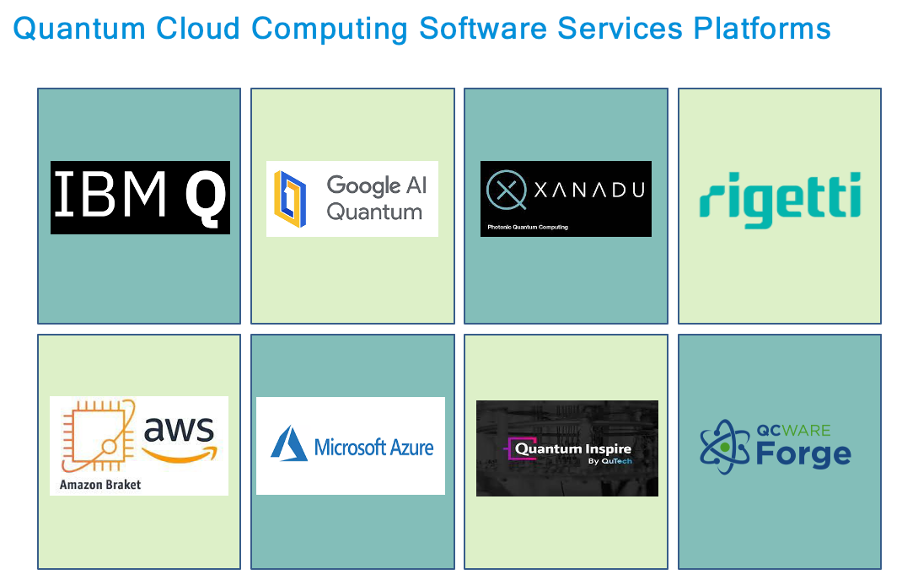
Leading quantum cloud platforms in 2025
IBM Quantum (Qiskit Runtime)
IBM leads with Qiskit Runtime, featuring primitives like Sampler and Estimator. Sessions keep intermediate data on the quantum backend, dramatically reducing latency for hybrid jobs.
Amazon Braket Hybrid Jobs
Braket excels at managed hybrid jobs, supporting PennyLane, Cirq, and Qiskit. It provides on-demand classical compute alongside QPU access, ideal for large-scale variational algorithms.
Microsoft Azure Quantum
Azure Quantum emphasizes integrated hybrid computing with Q# and the Quantum Intermediate Representation (QIR). Recent advancements include reliable logical qubits and tight classical-quantum integration.
Other Notable Platforms
Google Quantum AI (Cirq), Xanadu (PennyLane), qBraid, and Classiq offer multi-platform support and advanced algorithm design tools.
How Developers Get Started with Hybrid Quantum APIs
Most platforms offer free tiers with simulator access and limited QPU time.
Example using Qiskit Runtime (simplified VQE setup):
from qiskit_ibm_runtime import QiskitRuntimeService, Estimator
from qiskit import QuantumCircuit

service = QiskitRuntimeService()
backend = service.least_busy(simulator=False)

qc = QuantumCircuit(2)
qc.h(0)
qc.cx(0, 1)

estimator = Estimator(backend=backend)
job = estimator.run(qc, observables=...)  # In hybrid loop
result = job.result()
Amazon Braket hybrid job example:
from braket.jobs import hybrid_job

@hybrid_job(device="arn:aws:braket:::device/quantum-simulator/amazon_sv1")
def vqe_algorithm(parameters):
    # Quantum circuit execution here
    return energy
Challenges and Limitations
Despite progress, challenges remain:
- Noise and errors: NISQ devices require error mitigation.
- Queue times: Popular QPUs can have long waits.
- Cost: Real hardware runs are expensive.
- Skill gap: Quantum concepts require new thinking.
Providers are addressing these with better error correction previews, priority access, and improved simulators.
Real-World Applications
Hybrid APIs are driving impact in:
- Chemistry & Materials: Molecular simulation with VQE.
- Optimization: Logistics and finance with QAOA.
- Machine Learning: Quantum kernels and hybrid neural networks.
- Cryptography: Testing post-quantum algorithms.
The Future of Hybrid Quantum APIs
As we approach utility-scale quantum computing, hybrid APIs will evolve toward tighter integration, automated error correction, and standardized interfaces. 2025 marks the year many organizations begin building quantum-ready software stacks.
Conclusion
Hybrid quantum-classical APIs have democratized access to quantum computing, allowing software developers to experiment and build practical applications today. The ecosystem in 2025 is mature, accessible, and rapidly advancing. Now is the time to learn these tools and prepare for the quantum advantage era.
Start your quantum journey today — the future of software development is hybrid.